To practice Setu Bandhasana, also known as Bridge Pose, you can follow the steps below:
Preparation:
Find a clean, quiet, and well-ventilated space for your practice.
Use a yoga mat or a comfortable surface to support your body.
Wear comfortable clothing that allows you to move freely.
Starting position:
Lie down on your back with your knees bent and feet flat on the floor, hip-width apart.
Keep your arms alongside your body, with your palms facing down.
Engaging the pose:
Now, press your feet firmly into the ground, keeping them parallel and hip-distance apart.
Inhale deeply and lift your hips off the mat, gradually rolling your spine off the floor.
As you lift, try to engage your core and buttocks muscles, allowing your thighs to move towards each other.
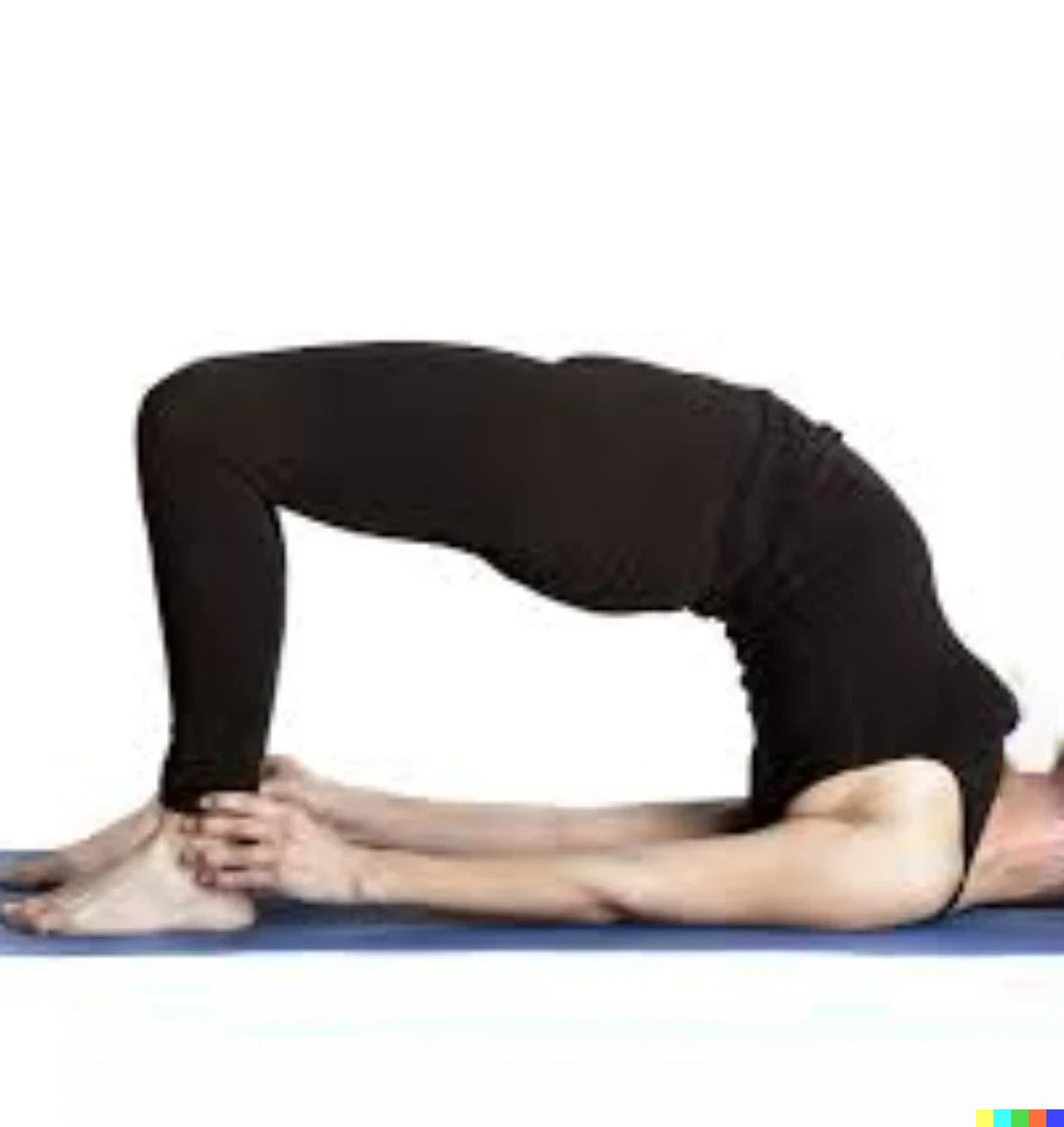
Positioning your body:
Once you have lifted your hips, try to interlace your fingers beneath your back while pressing your arms and shoulders down into the mat.
Alternatively, you can keep your palms flat on the floor for added stability.
Body alignment:
Keep your thighs and feet parallel to each other.
Relax your neck and shoulders, allowing your chin to slightly tuck in towards your chest.
Try to distribute the weight evenly across your shoulders, arms, and feet.
Holding the pose:
Take slow, deep breaths and hold the pose for 30 seconds to 1 minute, or longer if comfortable.
Focus on relaxing your body and maintaining a steady rhythm of breath.
Releasing the pose:
To come out of the pose, gently release your hands from beneath your back.
Lower your spine and hips back down to the mat, vertebra by vertebra, allowing your body to relax completely.
It's important to listen to your body and not push yourself beyond your limits. If you experience any discomfort or pain, ease out of the pose slowly. Regular practice will help you improve your flexibility and strength in Sethu Bandhasana. Remember to consult with a qualified yoga instructor if you have any specific concerns or physical limitations.